The Recovery Clock: How AI in Bodily Injury Claims Gets People Made Whole Faster
Bodily injury claims take longest to settle, and the injured person carries the delay. Here is how AI examining speeds funded treatment, interim payments, and fair settlements, and why claimants, providers, employers, and insurers all benefit.
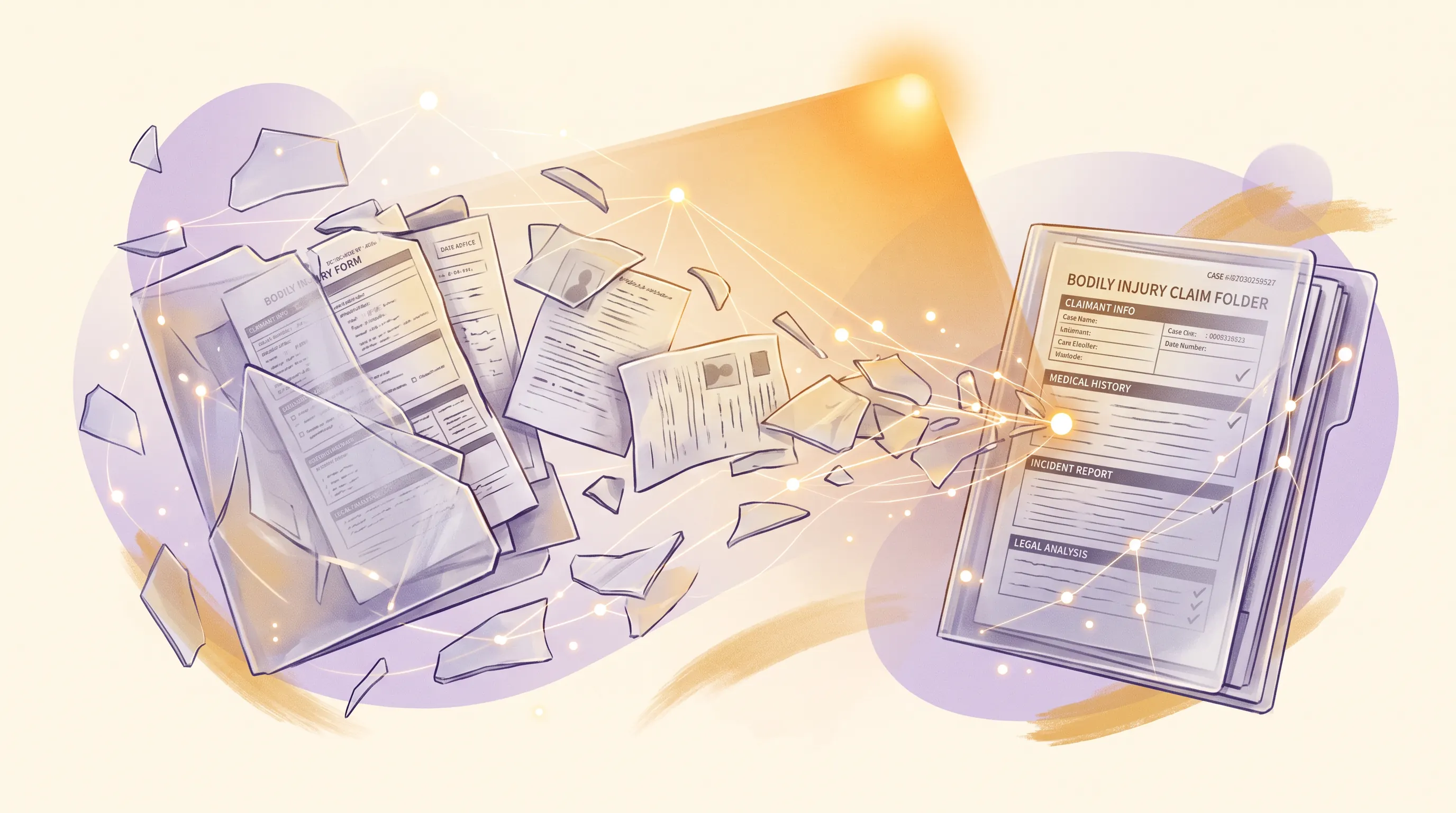
Bodily injury claims are the longest and most contested files in insurance. A single claim can stay open for months, sometimes years, while medical records accumulate, valuations are argued, and payments wait. The delay is usually framed as an insurer cost. In practice, the injured person carries it.
AI claims examining shortens that timeline. It handles the preparation work that slows a file down, so decisions and payments arrive sooner and rest on better evidence.

What AI does on a bodily injury file:
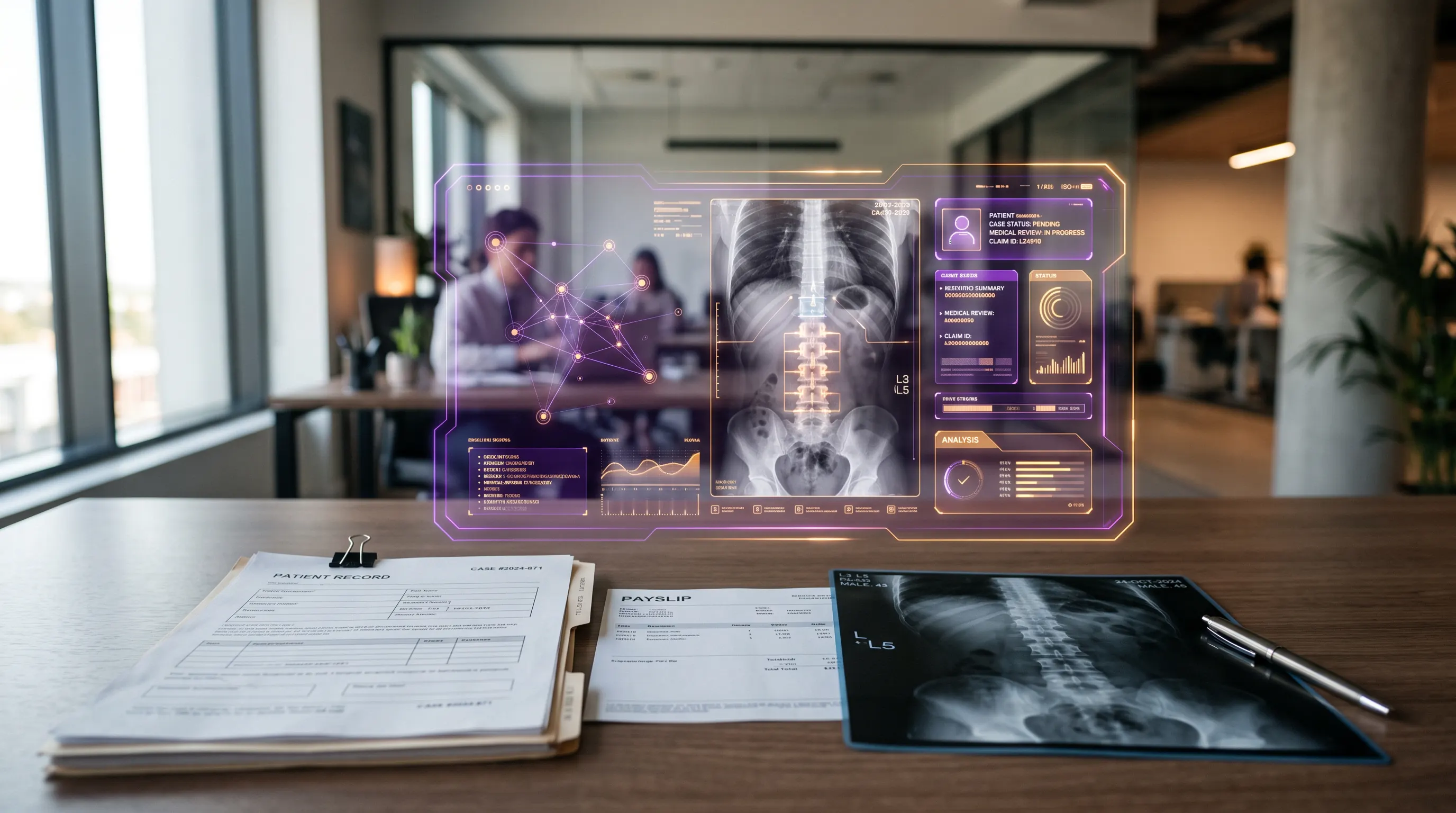
- Reads and structures medical records, pulling diagnoses, treatment dates, and care gaps into a clean timeline.
- Benchmarks injury valuations against comparable settled claims, producing a defensible range instead of a guess.
- Flags inconsistencies and fraud signals early, so genuine claims are not held up by blanket suspicion.
- Surfaces the evidence an examiner needs to approve interim payments while the claim is still open.
The examiner still decides. AI removes the hours of manual assembly that used to sit between a claim and a decision.

Who benefits:
- Injured claimants get treatment funded and settlements paid sooner, which supports faster physical recovery.
- Medical providers are paid on time and spend less effort answering documentation requests.
- Employers see people return to work sooner when care is not stalled.
- Insurers cut leakage, reduce disputes, and lower the cost of files that would otherwise drift toward litigation.
None of this depends on paying claims that should not be paid. It depends on paying valid claims correctly and quickly, and identifying weak ones with evidence rather than delay.
Speed and fairness are usually treated as a trade-off in bodily injury claims. Applied to the preparation layer, AI makes them the same thing. The faster a well-documented claim moves, the sooner an injured person can get on with recovery.