Insights from Lawdify
Product thinking, claims research, and field notes from the Lawdify team.

The Fast Lane for Injury Claims
Not every bodily injury claim needs months of review. Here is how AI triage separates straightforward TPBI and WICA claims from complex ones, so simple files settle in days and serious injuries get the expert attention they deserve, and why claimants, providers, employers, and insurers all gain.

Nothing Lost in Translation: How AI Examines Bodily Injury Claims Across Languages
In APAC a single bodily injury claim can arrive in three languages: a Japanese discharge summary, a Malay clinic note, an English police report. Here is how AI-assisted examining reads them all with the same rigor, so claimants are not disadvantaged by language and providers, employers, and insurers get a faster, fairer outcome.
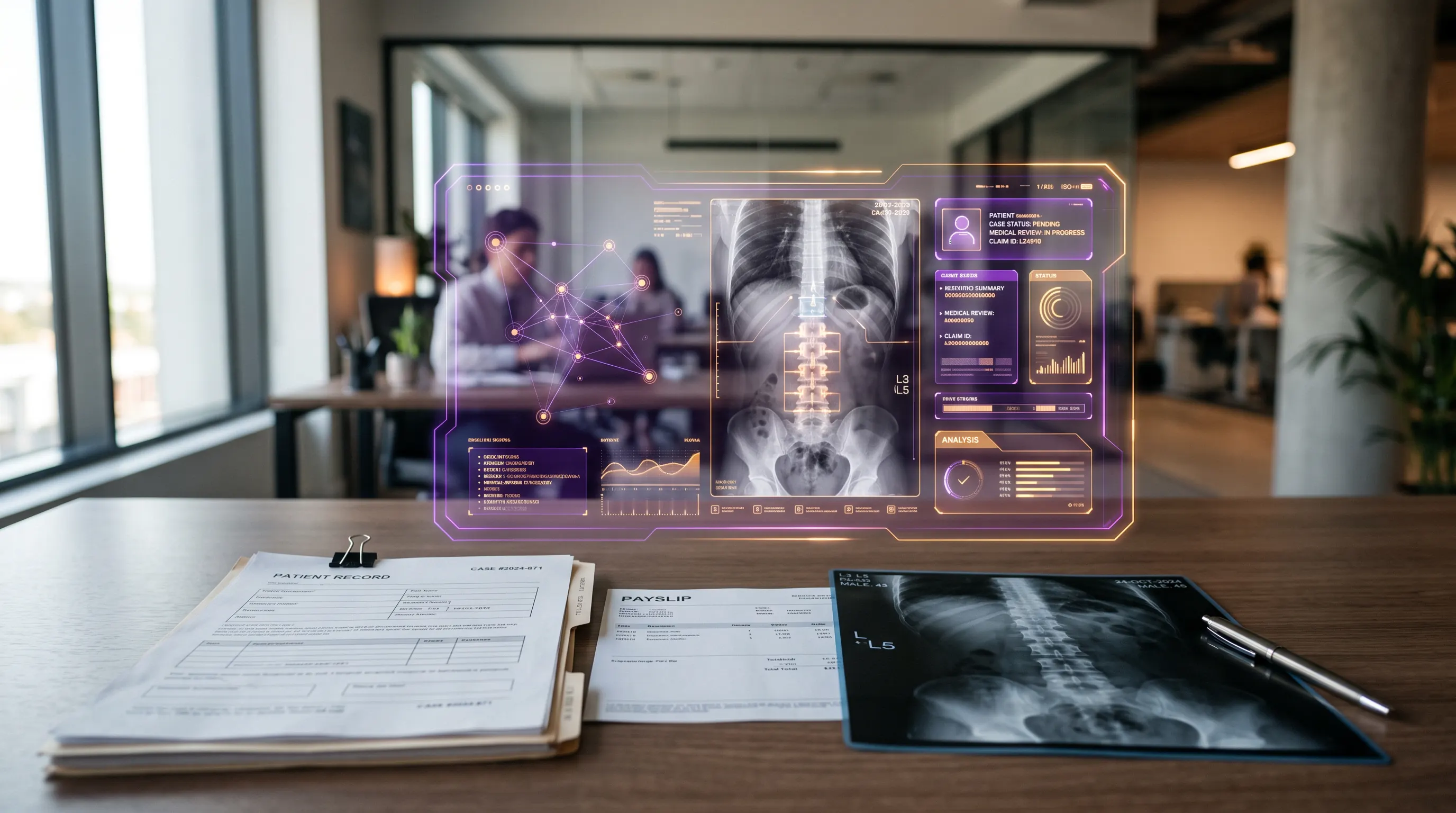
Off the Job, Not Out of Pocket: How AI Speeds Work Injury Compensation Claims
Work injury compensation claims like WICA follow a fixed formula, yet injured workers still wait weeks to be paid. Here is how AI reads the file, calculates the entitlement, and gets workers, employers, and insurers a faster, fairer outcome.

Where's My Claim? Bringing Real-Time Answers to Injury Settlements
Bodily injury claims like TPBI and WICA can go dark for months, leaving claimants, workers, and providers guessing. Here is how AI turns a silent claim into a live one with real-time status, missing-document prompts, and evidence-based timelines, and why everyone gains.

What's the Pain Worth? How AI Benchmarks General Damages in Bodily Injury Claims
General damages for pain, suffering, and loss of amenity are the most subjective number in a bodily injury claim. Here is how AI-assisted examining anchors that figure to the medical evidence and comparable outcomes, and why claimants, unrepresented claimants, care providers, insurers, and courts all get a fairer result.

The Bill That Hasn't Arrived Yet: How AI Projects Future Care in Bodily Injury Claims
In a serious bodily injury claim the largest number is rarely the treatment already given, it is the care still to come. Here is how AI-assisted examining builds an evidence-based future-care projection from the medical file, and why claimants, unrepresented claimants, care providers, and insurers all get a fairer outcome.

Proving the Paycheck: How AI Verifies Lost Income in Bodily Injury Claims
Lost earnings are among the largest, most contested and hardest-to-prove items in a bodily injury claim, and the ones informal and gig workers lose most on. Here is how AI-assisted examining reconstructs a pre-injury earnings baseline from the documents, aligns it with the certified recovery period, and why claimants, unrepresented claimants, employers and insurers all get a fairer outcome.
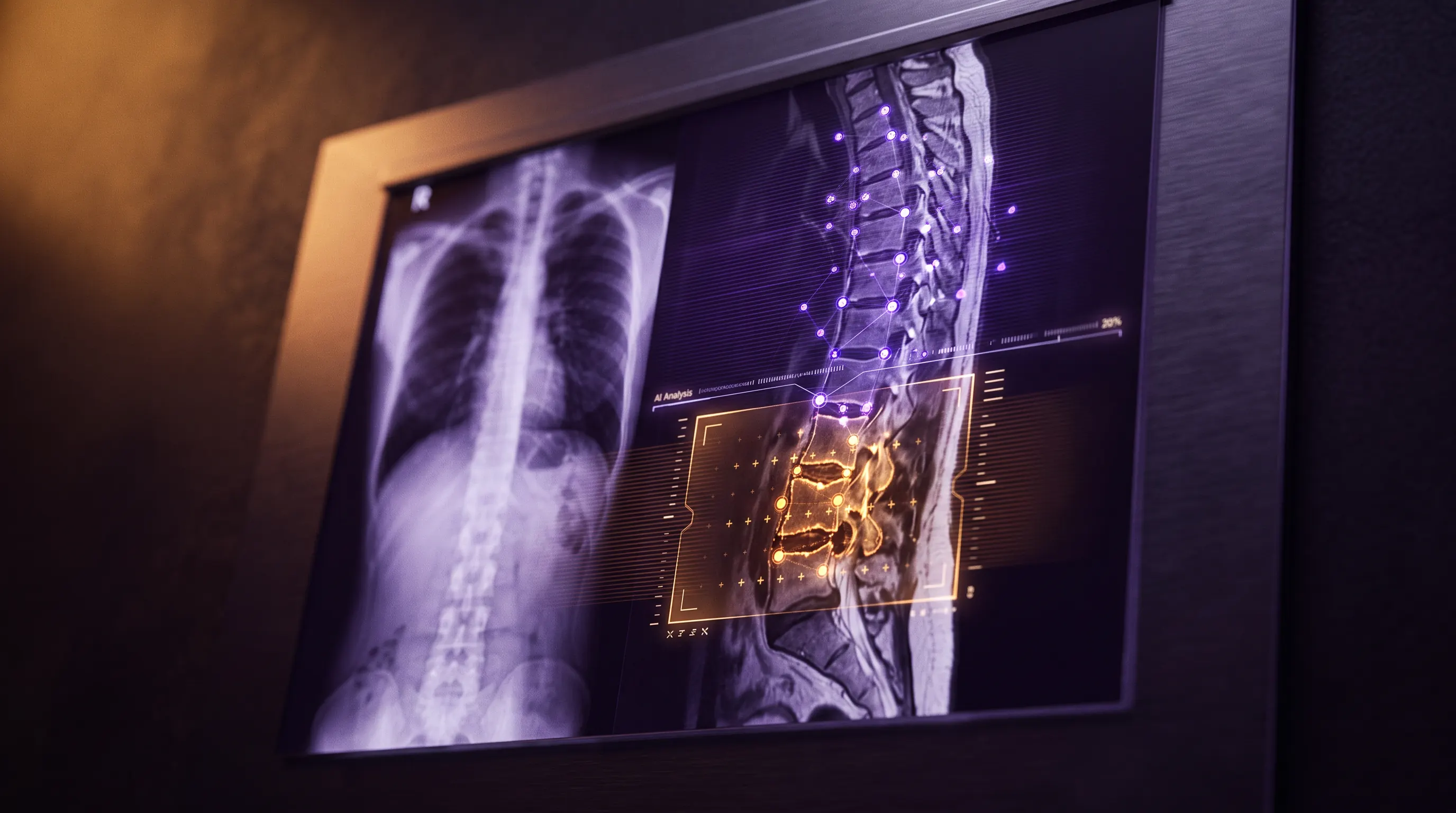
New Injury or Old? How AI Settles the Causation Question in Bodily Injury Claims
The hardest bodily injury disputes turn on what the accident actually caused versus a pre-existing condition. Here is how AI-assisted examining reads the full medical history, apportions injury on documented evidence, and why claimants, care providers, unrepresented claimants, and insurers all get a fairer outcome.

Every Page Accounted For: How AI Reads the Medical File Behind a Bodily Injury Claim
How AI reads the medical file behind a bodily injury claim: building the chronology, validating treatment against injury, flagging gaps, and benchmarking value, and why claimants, providers, attorneys, and insurers all gain.

A Fair Number, Every Time: How AI Brings Consistency to Bodily Injury Claims
Bodily injury settlements vary by examiner, documentation, and whether a claimant has a lawyer. Here is how AI-assisted examining structures the medical record, benchmarks value, and flags gaps, so claimants, providers, employers, and insurers all get a fairer, more consistent outcome.

Back to Work, Back to Health: How AI Examining Puts Recovery First in Bodily Injury Claims
Bodily injury claims are measured in money and time, but the real measure is whether the injured person recovers. Here is how AI-assisted examining makes recovery the goal of the file, and why claimants, care providers, employers, and insurers all gain.

The Recovery Clock: How AI in Bodily Injury Claims Gets People Made Whole Faster
Bodily injury claims take longest to settle, and the injured person carries the delay. Here is how AI examining speeds funded treatment, interim payments, and fair settlements, and why claimants, providers, employers, and insurers all benefit.

Clearing the Queue: How AI Examining Drains the Motor Claims Backlog
Every motor insurer carries a standing backlog of open claims — aged files that inflate reserves, invite disputes, and erode trust. Here's how AI examining drains that queue at each stage: computer vision damage assessment, automated fraud detection, and straight-through payout.

Paid in Days, Not Weeks: What AI Claims Examining Looks Like From the Policyholder's Seat
Insurers spent a decade optimizing claims for their own numbers; the policyholder never felt it. Here's how AI examining — computer vision damage assessment, individualized fraud scoring, and straight-through payout — reshapes the motor claim from the claimant's seat, and why that's the strongest retention tool a carrier has.

The Claims Desk That Never Closes: How AI Examines Motor Claims Around the Clock
Motor accidents don't keep office hours. See how AI examines claims on arrival — computer-vision damage assessment, continuous fraud detection, and straight-through payouts, any hour of the day.
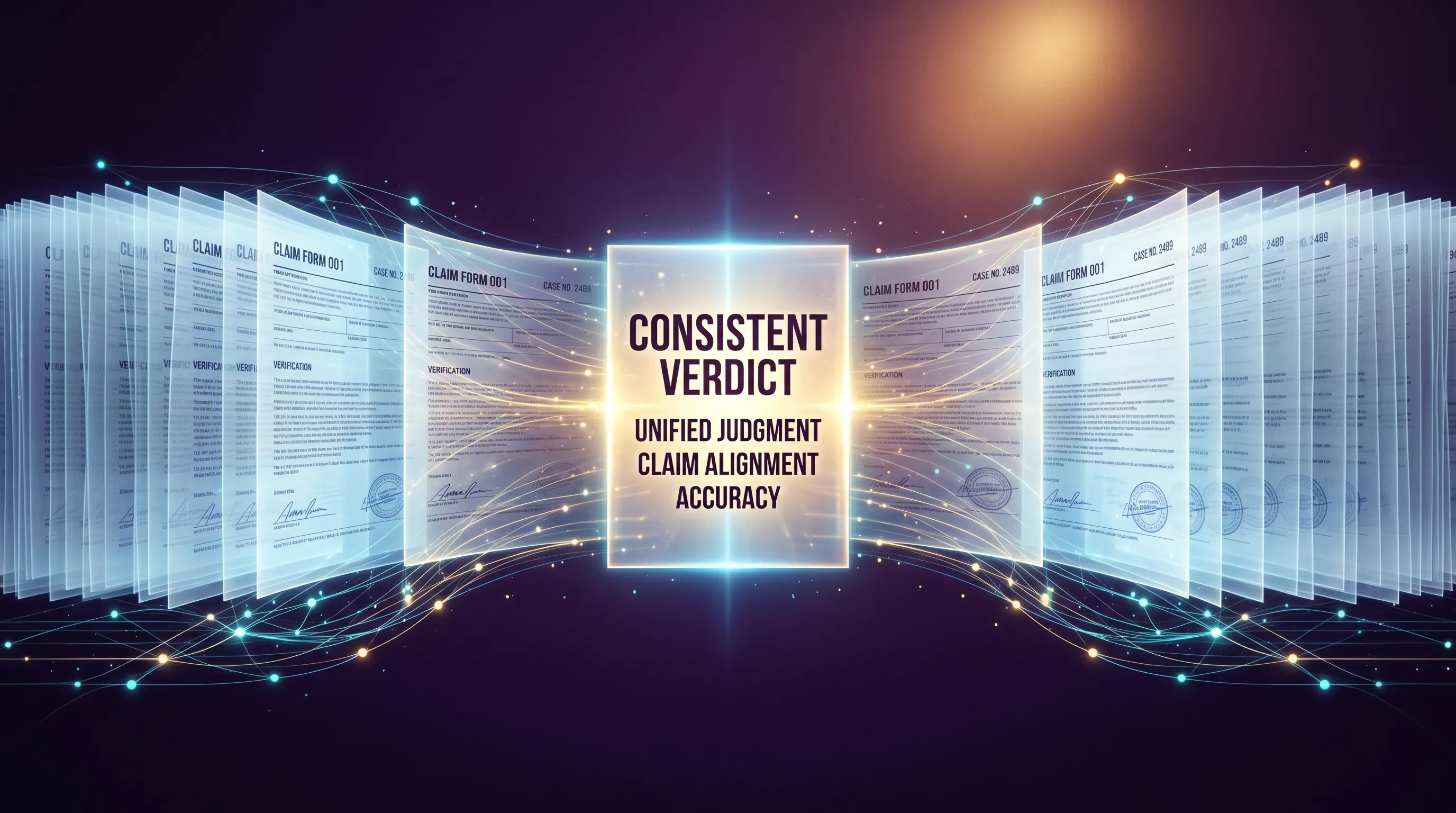
Two Examiners, One Verdict: How AI Is Ending Decision Variance in Motor Claims
Two experienced examiners can reach different conclusions on the same motor claim. AI applies the same logic to every file — consistent computer vision damage reads, uniform fraud scoring, and standardized payout quantum — cutting leakage and disputes while keeping the examiner in control.

One Claim, Three Models: How AI Examines a Motor Claim From Photo to Payout
Follow a single motor claim through the three AI models that now do the preparation work — computer vision damage assessment, automated fraud detection, and payout processing. A concrete look at how examining works when these run as one sequence.

The Write-Off Line: How AI Is Making Motor Total-Loss Decisions Faster and Fairer
Total-loss decisions are among the slowest, most disputed calls in motor claims. AI identifies write-offs earlier, values vehicles from live market data, and optimizes salvage, compressing settlement time while cutting leakage and disputes.

How AI-Powered FNOL Is Cutting Motor Claims Cycle Time in Half
The first notice of loss is where motor claims cycle time is made or lost. AI-powered FNOL — from telematics auto-detection to predictive routing — is compressing intake from days to minutes and cutting handling costs by up to 30%.

Behind the Claim: How AI Is Exposing Motor Insurance Fraud Rings and Paying Clean Claims Faster
Organised motor insurance fraud — staged accidents, referral networks, claims farms — accounts for the majority of financial loss. Here's how AI combines computer vision, network analysis, and telematics to catch coordinated fraud and simultaneously accelerate payouts for legitimate claims.
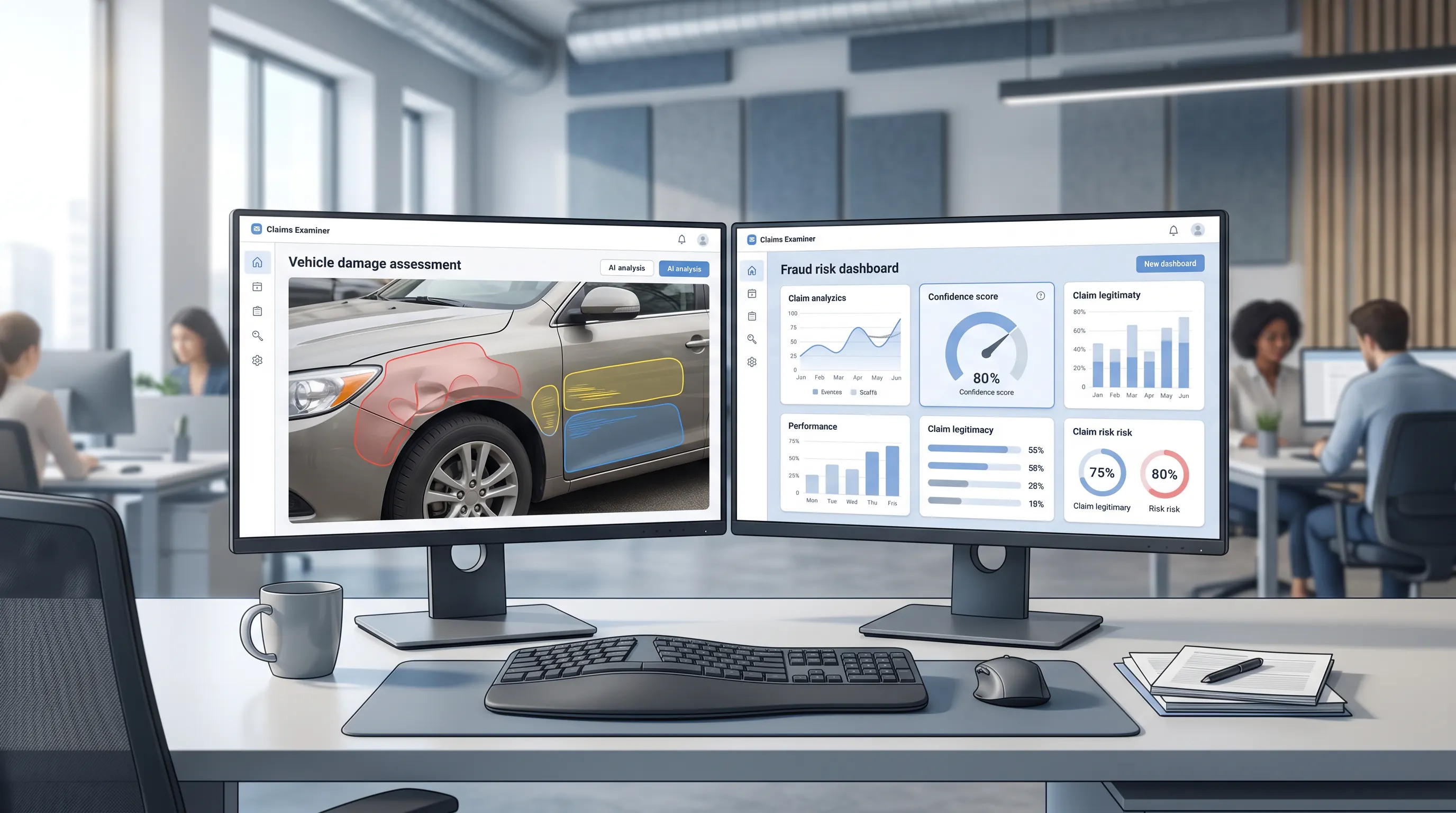
AI Tools Every Motor Claims Examiner Should Know
A concise primer on the three AI capabilities transforming motor claims examining: computer vision for damage assessment, automated fraud detection, and intelligent payout acceleration. Written for claims professionals navigating the shift from manual workflows to AI-assisted decision-making.
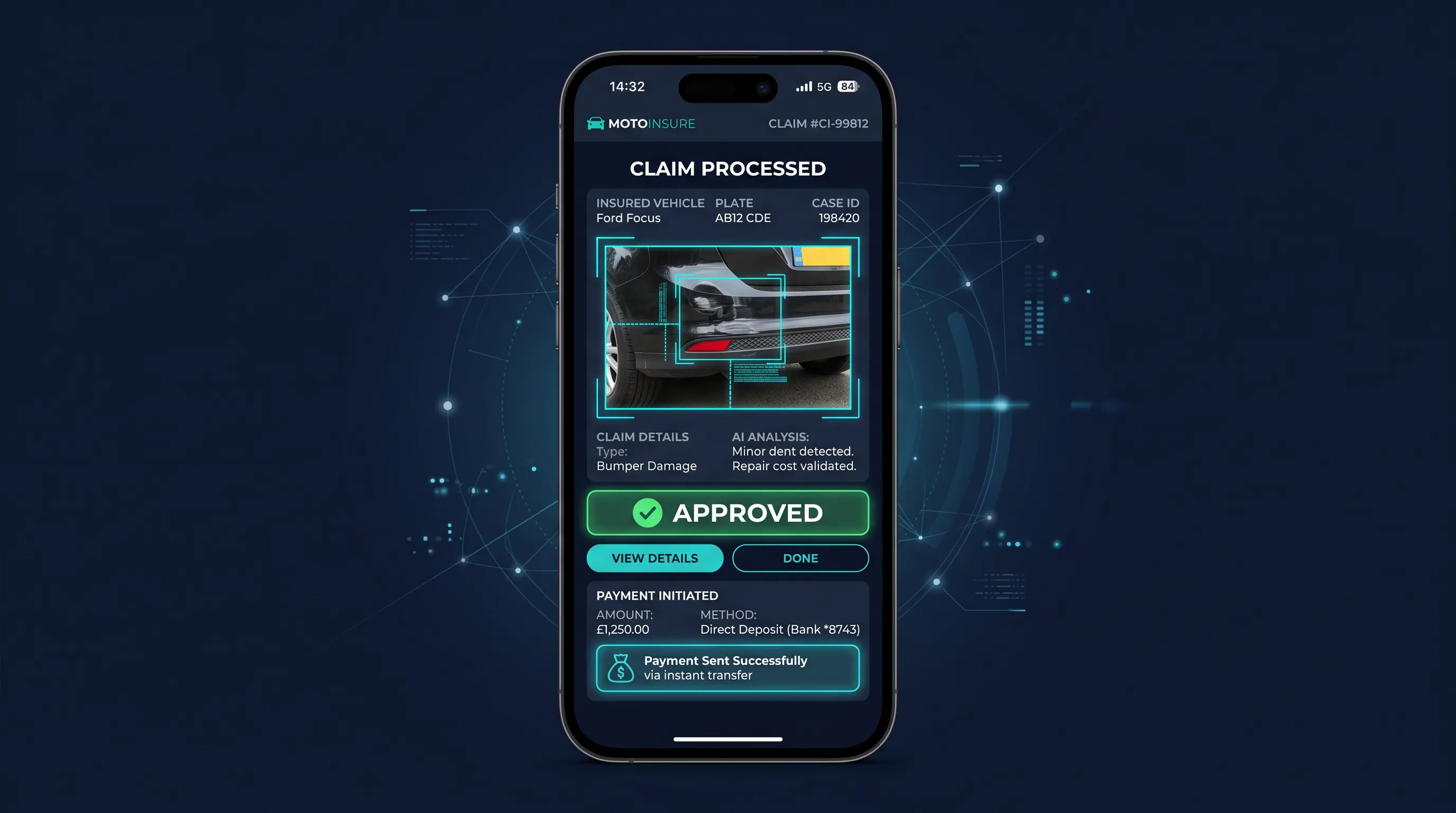
Zero-Touch Motor Claims: How AI Is Enabling Straight-Through Processing for Minor Damage
Minor motor damage claims — the majority of claim volume — are a poor use of examiner time. AI-powered straight-through processing (STP) combines computer vision, fraud scoring, and automated payment to settle clean low-complexity claims without human touch. Here's how the workflow functions and what it means for loss ratios and customer retention.
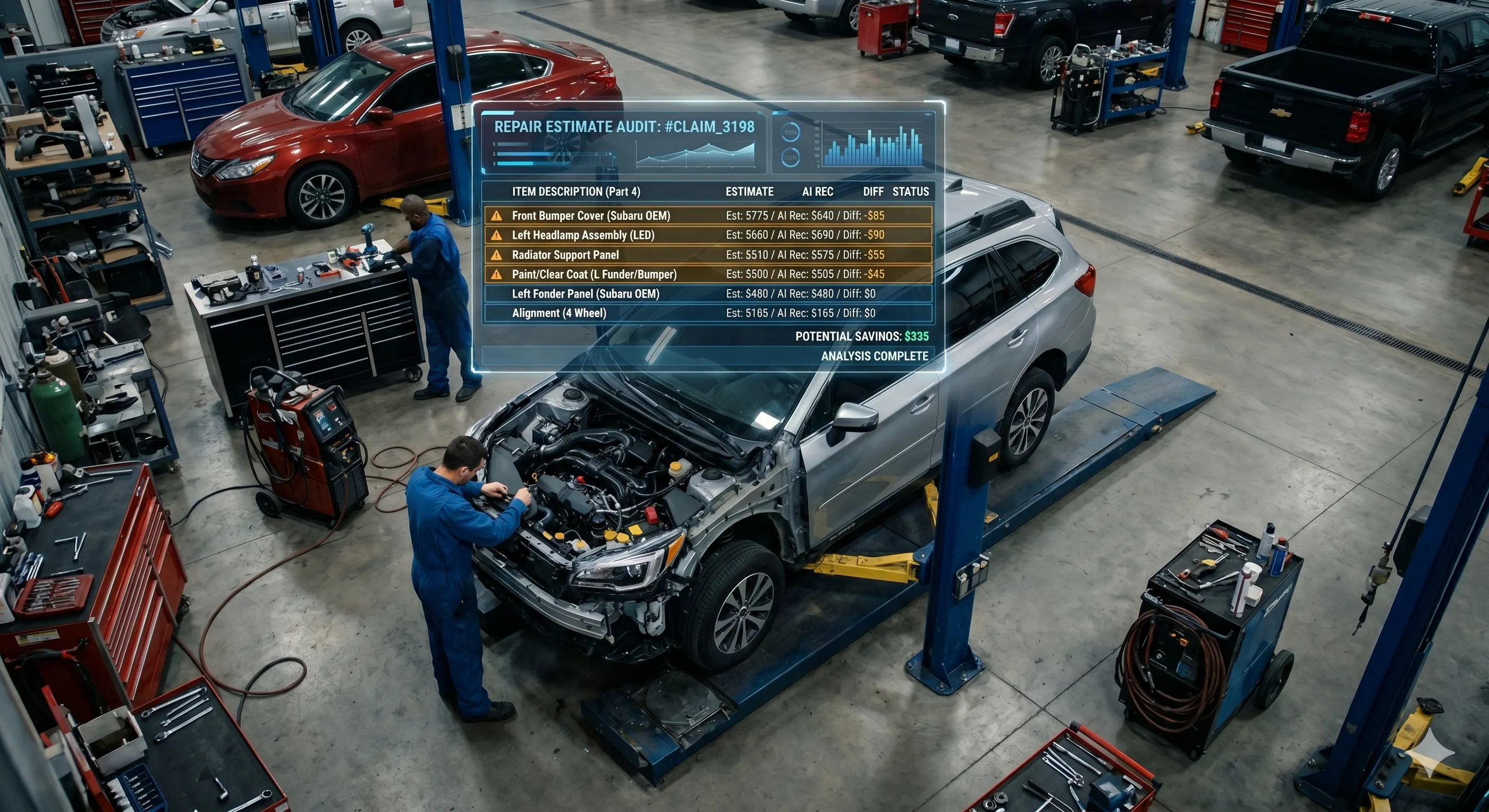
Beyond the Damage Photo: How AI Is Auditing Repair Costs in Motor Claims
Computer vision identifies the damage. That's only half the story. AI now validates whether the repair shop's estimate — and final invoice — actually match it. Here's how carriers are using automated estimate auditing to cut leakage without slowing settlements.

Before It Goes to Court: How AI Is Helping Motor Insurers Negotiate Better and Avoid Litigation
Litigated motor injury claims cost two to four times more than comparable claims settled directly, once defense fees and indemnity inflation are factored in. AI is now reshaping where carriers intervene — from litigation propensity scoring at FNOL to quantum benchmarking and demand-package triage. Here's how claims teams are using data-driven negotiation to settle earlier, defend numbers more confidently, and keep more files out of court.

The Hidden 5–10%: How AI Is Plugging Claims Leakage in Motor Insurance
Industry analysts place motor claims leakage at 5–10% of total claims spend — overpayments, duplicates, missed exclusions, and inflated invoices that erode the loss ratio without ever showing up as a line item. Here's how AI is closing that gap across the motor claims lifecycle, with evidence from peer-reviewed research, McKinsey, and the ABI.
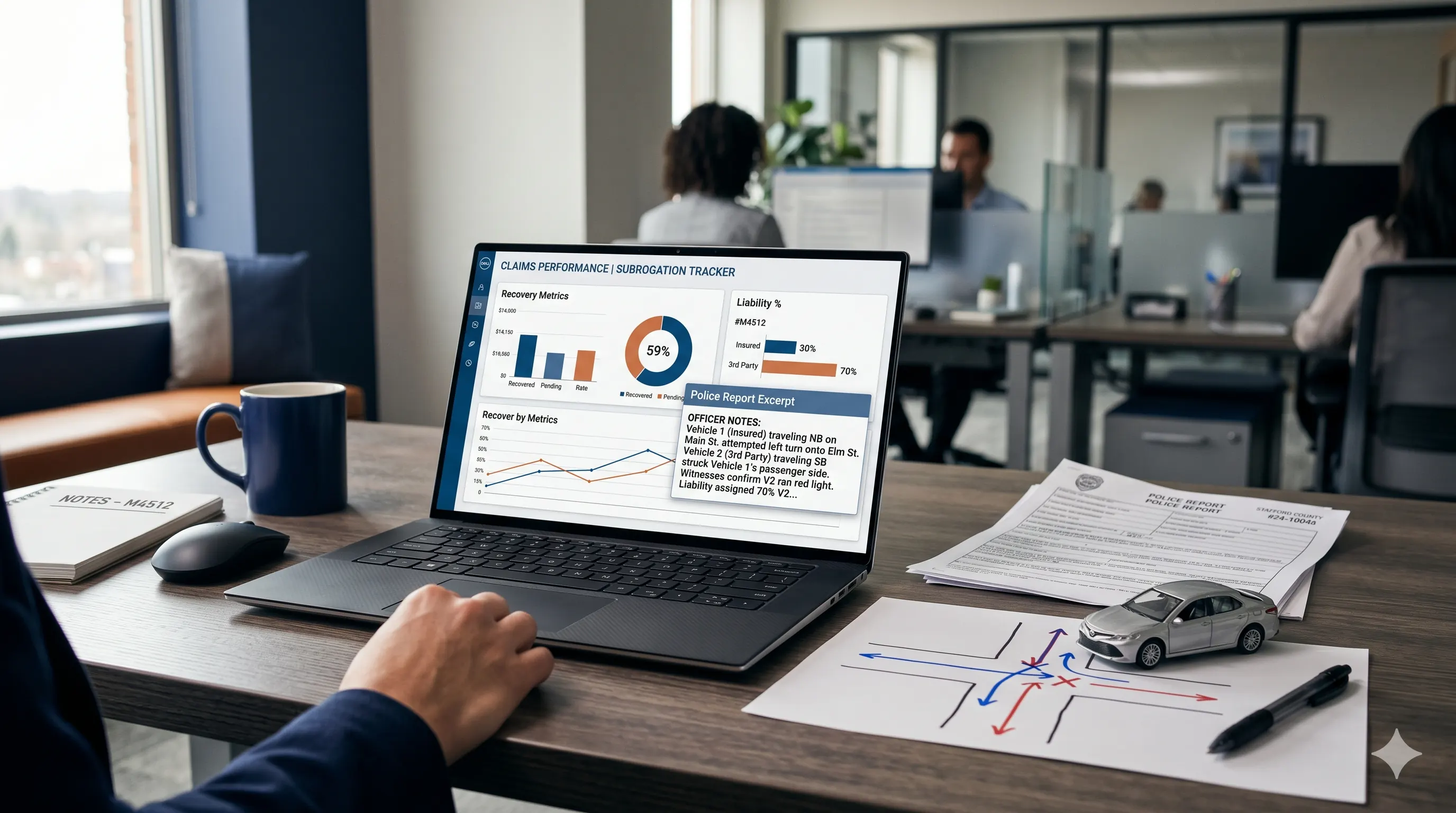
The Subrogation Gap: How AI Is Recovering the Dollars Motor Insurers Leave Behind
Subrogation is where motor insurers routinely leave money on the table, industry studies suggest 10 to 25 percent of viable opportunities go unpursued. Here's how AI is helping claims teams surface liability faster, score recovery probability, and turn subrogation from a back-office afterthought into a measurable lift on combined ratio.

Why Reserve Estimation Is the Quietest, Most Consequential AI Use Case in Motor Insurance
Reserves are the quietest, most consequential number on a motor insurer's balance sheet. AI-driven reserve estimation changes capital efficiency, pricing accuracy, regulatory standing, and how early carriers can spot trouble. Here's what that shift actually looks like — and what it means for combined ratio, IBNR, and the people who own those numbers.

How AI Is Changing Third Party Bodily Injury Claims in Motor Insurance
Bodily injury is the longest, most expensive, and most contested part of motor claims. Here's how AI is changing how carriers triage, reserve, investigate, and settle TPBI claims in 2026 — and where human judgment is becoming more critical, not less.

How AI Is Reshaping Own Damage Claims in Motor Insurance
Own damage is where AI in motor claims has gone from pilot to production. From photo-based FNOL to computer vision damage assessment and image fraud detection, here's how carriers are turning weeks-long workflows into same-day settlements in 2026.
Ready to Transform Claims Assessment?
See how Lawdify can reduce turnaround time, prevent leakage, and detect fraud at scale.
