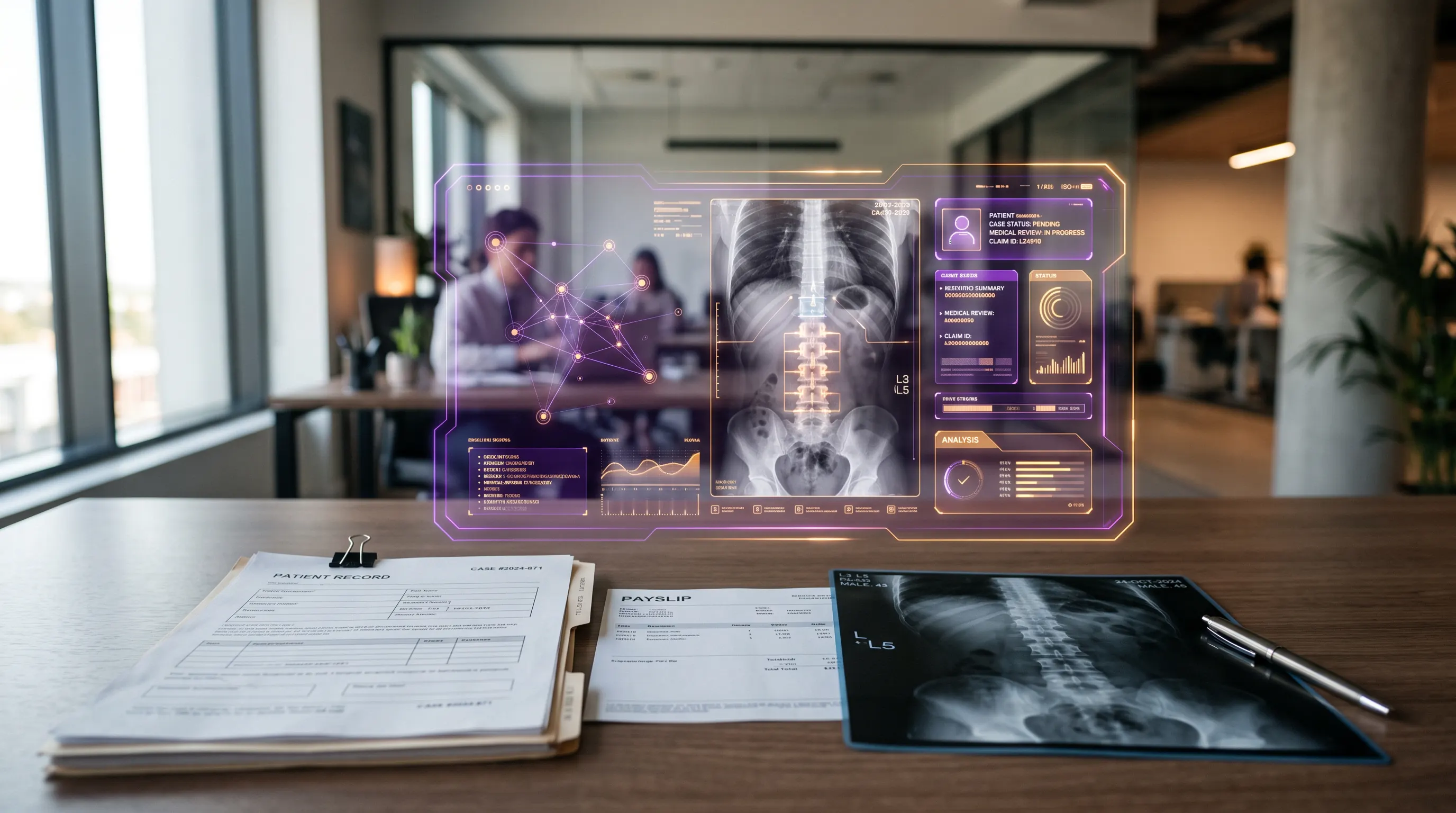
AI Tools Every Motor Claims Examiner Should Know
A concise primer on the three AI capabilities transforming motor claims examining: computer vision for damage assessment, automated fraud detection, and intelligent payout acceleration. Written for claims professionals navigating the shift from manual workflows to AI-assisted decision-making.
Motor claims examining is no longer a purely manual discipline. AI has moved from pilot programs to production systems, and examiners who understand these tools make faster, more accurate decisions. Here are the three capabilities reshaping daily workflows.
1. Computer Vision for Damage Assessment
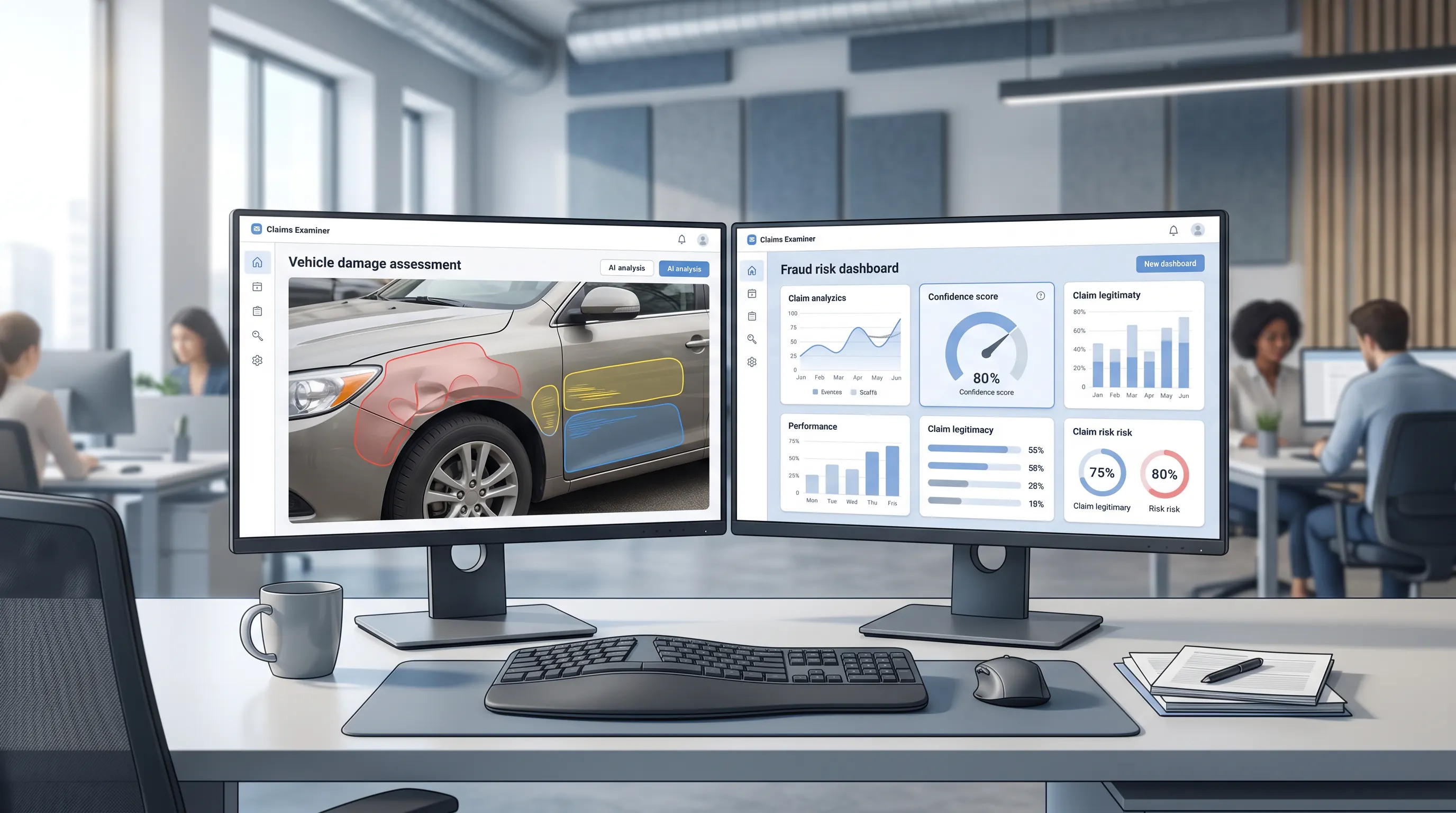
AI models trained on millions of vehicle images now classify damage at the panel level—identifying dents, scratches, cracks, and missing components from photos submitted at FNOL. The examiner receives a pre-populated damage summary with severity scores and repair-vs-replace recommendations before opening the file.
What this means for examiners:
- Faster initial triage—routine claims require validation, not reconstruction
- Consistent severity scoring across the portfolio
- Automatic flagging of prior damage included as new

2. Automated Fraud Detection
Image forensics and pattern recognition run in parallel with damage assessment. These systems detect:
- Photo manipulation — editing artifacts, inconsistent lighting, metadata anomalies
- Image reuse — photos appearing in multiple claims or across carriers
- Inconsistent damage patterns — collision angles that contradict reported scenarios
Examiners see a fraud risk score and specific flags, allowing them to prioritize investigation resources on genuinely suspicious files rather than reviewing every claim manually.

3. Faster Payout Processing
Straight-through processing now handles routine claims end-to-end: guided photo capture, damage assessment, pricing against parts catalogs and labor rates, and settlement authorization—without examiner intervention.
Key benefits:
- Cycle times drop from days to hours for clean claims
- Examiners focus on complex, disputed, or high-severity files
- Customer satisfaction improves with same-day settlements
The Examiner's Evolving Role
AI handles volume; examiners handle judgment. Multi-vehicle incidents, disputed liability, ADAS calibration edge cases, and suspected fraud still require human expertise. The shift is not replacement—it is reallocation toward work where human decision-making adds disproportionate value.
Claims organizations investing in these tools are pulling ahead on loss ratio and service metrics. For examiners, fluency with AI-assisted workflows is becoming a core professional skill.