Back to Work, Back to Health: How AI Examining Puts Recovery First in Bodily Injury Claims
Bodily injury claims are measured in money and time, but the real measure is whether the injured person recovers. Here is how AI-assisted examining makes recovery the goal of the file, and why claimants, care providers, employers, and insurers all gain.

Bodily injury claims are usually measured in money and time. The more important measure is whether the injured person actually recovers. AI-assisted claims examining is starting to make recovery, not just settlement, the organizing goal of the file.
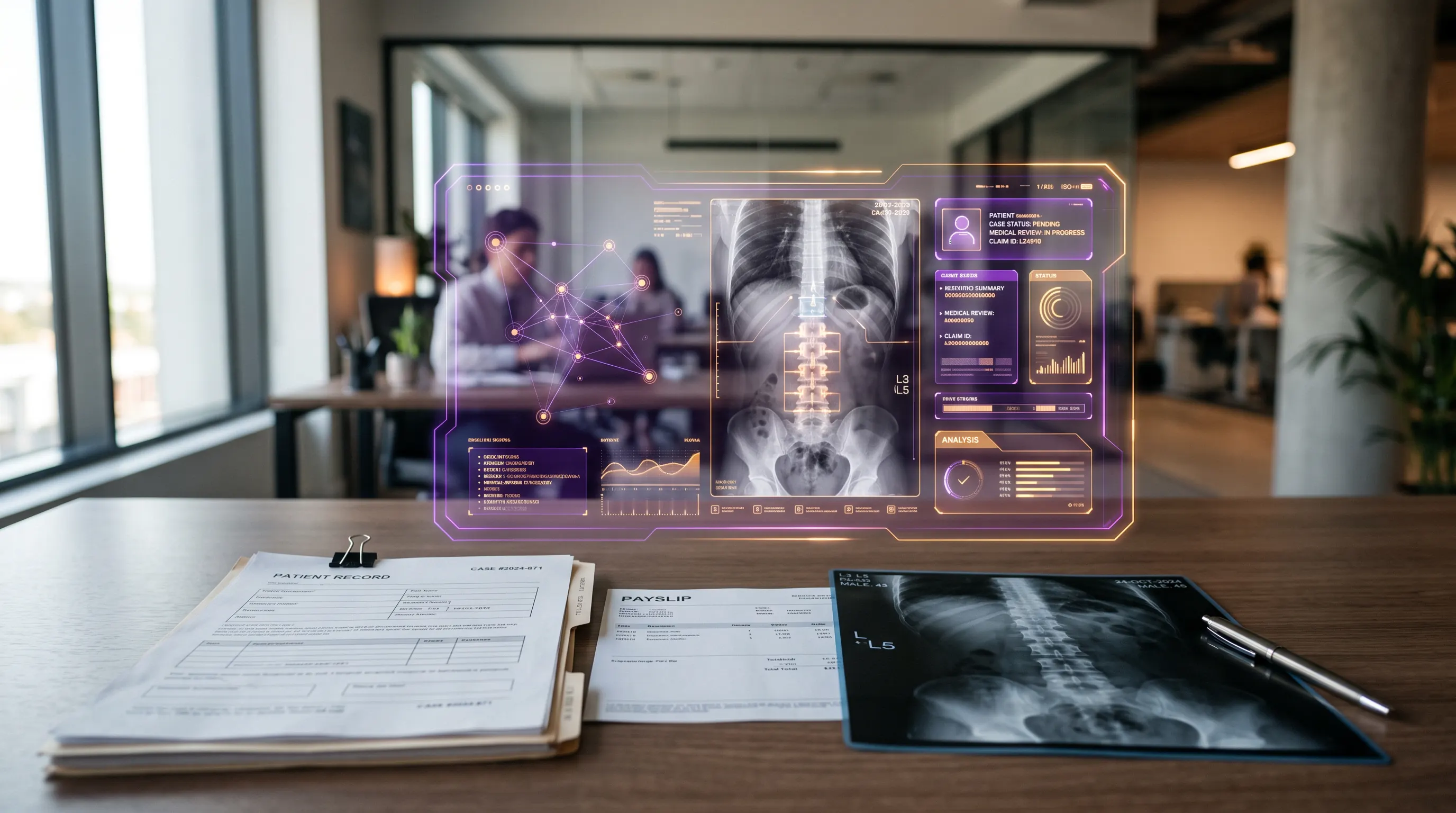
Traditional examining reads the medical evidence late, often after treatment has stalled or an injury has turned chronic. AI reverses the order. It reads every medical record on arrival, builds a treatment timeline, and flags where the right care is missing or delayed. Examiners then act on a clear picture instead of a paper pile.

What this looks like in practice:
- Early rehab signals: the model identifies injuries that respond to prompt physiotherapy or specialist referral and surfaces them for funding before recovery windows close.
- Treatment gaps: it detects stalled or inconsistent care and prompts follow-up instead of passive claim aging.
- Consistent valuation: similar injuries are benchmarked against comparable outcomes, reducing the variance that leaves some claimants under-supported.
- Faster authorisation: providers receive quicker decisions on treatment and payment, so care continues without funding limbo.

The benefit spreads well beyond the insurer:
- Injured people get funded, appropriate care sooner and spend less time in limbo.
- Healthcare and rehabilitation providers face less administrative friction and are paid faster.
- Employers see staff return to work sooner, lowering absence and cover costs.
- Insurers reduce long-tail indemnity and disputes, because a recovered claimant rarely litigates.
None of this removes the examiner. AI handles extraction, timeline building, and benchmarking; people make the judgment calls on liability, care, and settlement. The difference is that those calls happen earlier, on better evidence.
Recovery-first examining reframes the claim from a cost to be closed into an outcome to be managed. When the system is built to get people better, faster, everyone connected to the claim comes out ahead.