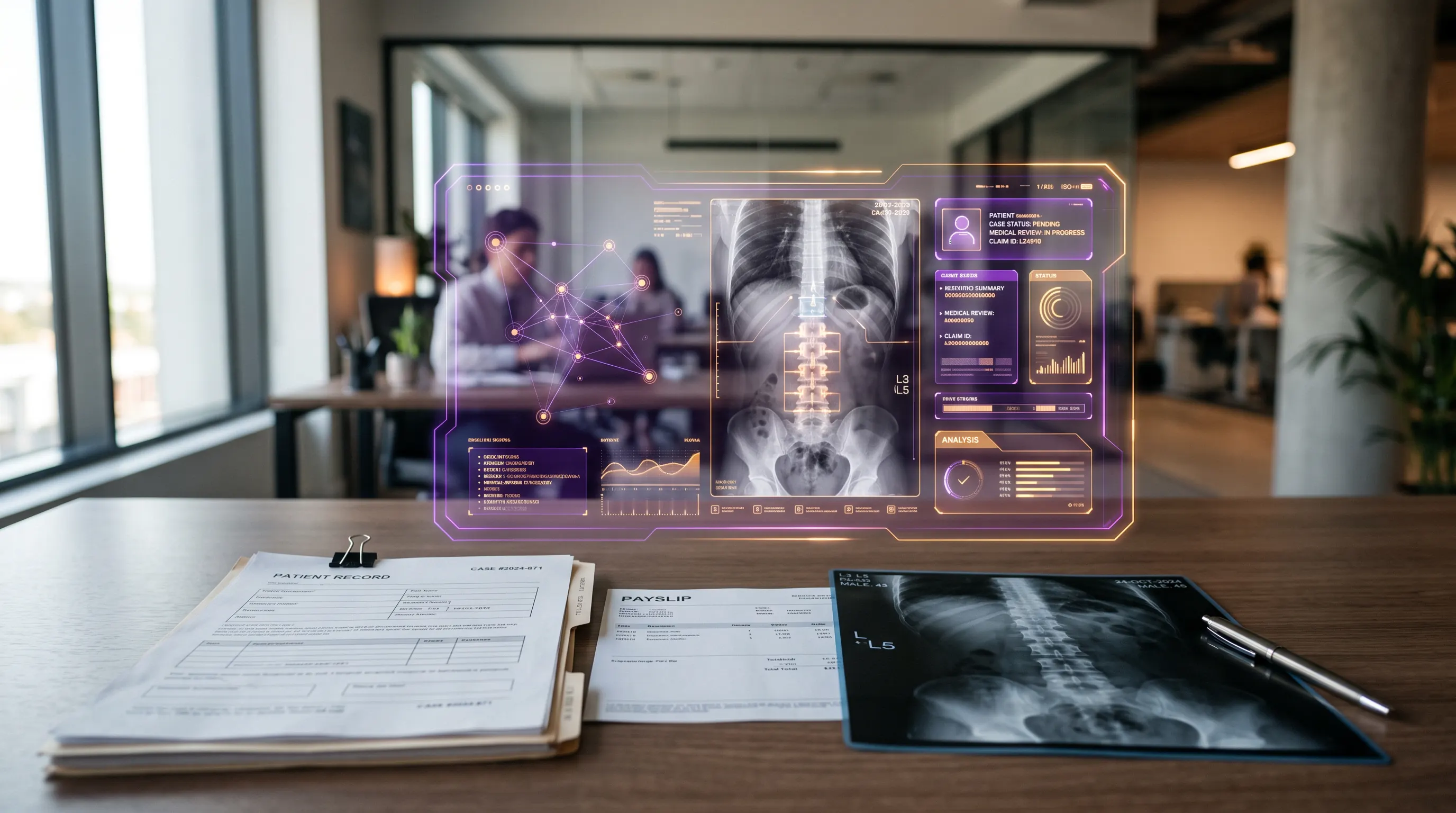
A Fair Number, Every Time: How AI Brings Consistency to Bodily Injury Claims
Bodily injury settlements vary by examiner, documentation, and whether a claimant has a lawyer. Here is how AI-assisted examining structures the medical record, benchmarks value, and flags gaps, so claimants, providers, employers, and insurers all get a fairer, more consistent outcome.

Bodily injury claims are the hardest to settle fairly. The same neck injury can be valued differently depending on which examiner opens the file, how well the claimant documented their treatment, and whether they hired a lawyer. AI-assisted examining narrows that gap.
Here is what it does in practice.
Reads the whole medical file. AI extracts diagnoses, treatment dates, and provider notes from hundreds of pages of records and bills, then assembles a clean chronological timeline. Nothing is skimmed or missed.

Benchmarks the value. It weighs the injury, treatment, and recovery against thousands of comparable settled claims, giving the examiner a defensible range instead of a gut estimate.
Flags what is missing. A gap in physiotherapy notes or an unpriced scan is surfaced early, so the file does not stall weeks later waiting on a single document.
The examiner still makes the decision. What changes is that every file arrives prepared the same way.
Why this matters beyond the insurer:
- Claimants get a number built on their full record, not on how well they argued it. The unrepresented are no longer at a disadvantage.
- Medical providers are paid faster, because invoices are reconciled against documented treatment on the first pass.
- Employers see injured staff return to work sooner when treatment is funded without delay.
- Insurers reserve more accurately, reduce leakage, and face fewer disputes.

Consistency is not about paying less. It is about paying the right amount, to the right person, at the right time, with a record that explains why.
That is the quiet value of AI in bodily injury examining. Not a faster machine, but a fairer one.