Where's My Claim? Bringing Real-Time Answers to Injury Settlements
Bodily injury claims like TPBI and WICA can go dark for months, leaving claimants, workers, and providers guessing. Here is how AI turns a silent claim into a live one with real-time status, missing-document prompts, and evidence-based timelines, and why everyone gains.

A bodily injury claim, whether third-party (TPBI) or work injury compensation (WICA), can take months to close. For most of that time the person waiting on it has no idea where it stands. They call, leave a message, and wait again. AI is quietly changing that, and the benefit reaches well past the insurer's loss ratio.
The reason claims go dark is rarely indifference. An examiner holds hundreds of open files, each a stack of medical reports, wage records, and correspondence in different formats and languages. Producing an accurate status for one claimant means reopening the whole file. Do that on demand for every caller and little else gets done.
AI removes the trade-off. Because the system structures every document as it arrives, it can answer three questions at any moment: what is complete, what is still outstanding, and who the file is waiting on. That turns a silent claim into a live one.
Practical applications already in production:
- Real-time status: claimants and employers see the current stage and next step instead of waiting for a callback.
- Missing-document prompts: the system names the exact report or wage slip still needed and asks the right party for it early, before the file stalls.
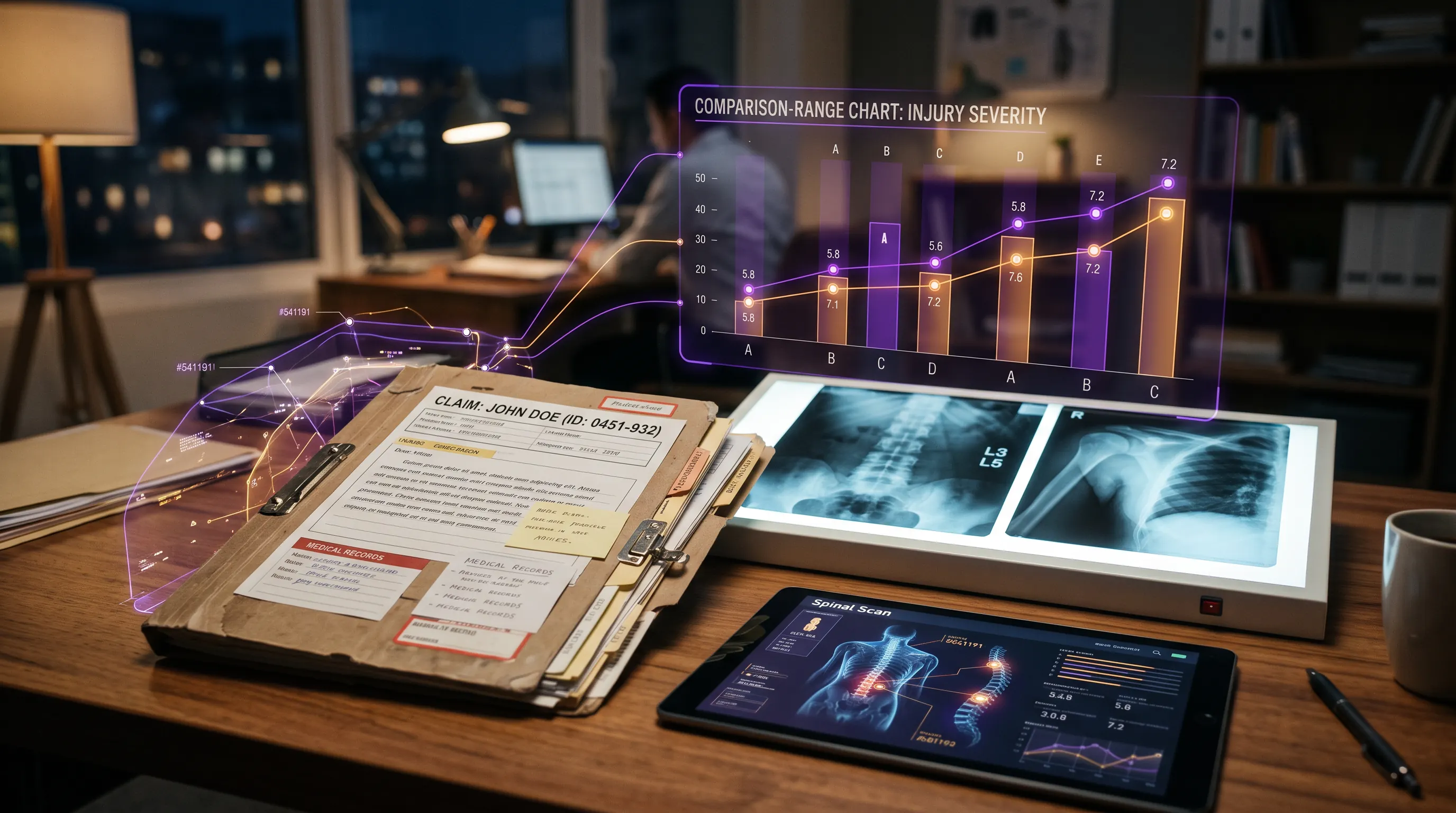
- Evidence-based timelines: a projected settlement window drawn from comparable closed claims, not a vague "in process."
- Interim payment triggers: eligible claimants are flagged for early payment while the full claim is finalised.

Everyone gains from the same visibility:
- Claimants and injured workers plan around a real date and stop chasing.
- Care providers and clinics know when payment is due.
- Employers track their WICA obligations without extra admin.
- Insurers cut the volume of status calls and rework, and close files sooner.

Transparency was long treated as a courtesy insurers could not afford. When the file structures itself, visibility becomes the cheapest part of the process, and the part claimants feel first.