The Bill That Hasn't Arrived Yet: How AI Projects Future Care in Bodily Injury Claims
In a serious bodily injury claim the largest number is rarely the treatment already given, it is the care still to come. Here is how AI-assisted examining builds an evidence-based future-care projection from the medical file, and why claimants, unrepresented claimants, care providers, and insurers all get a fairer outcome.
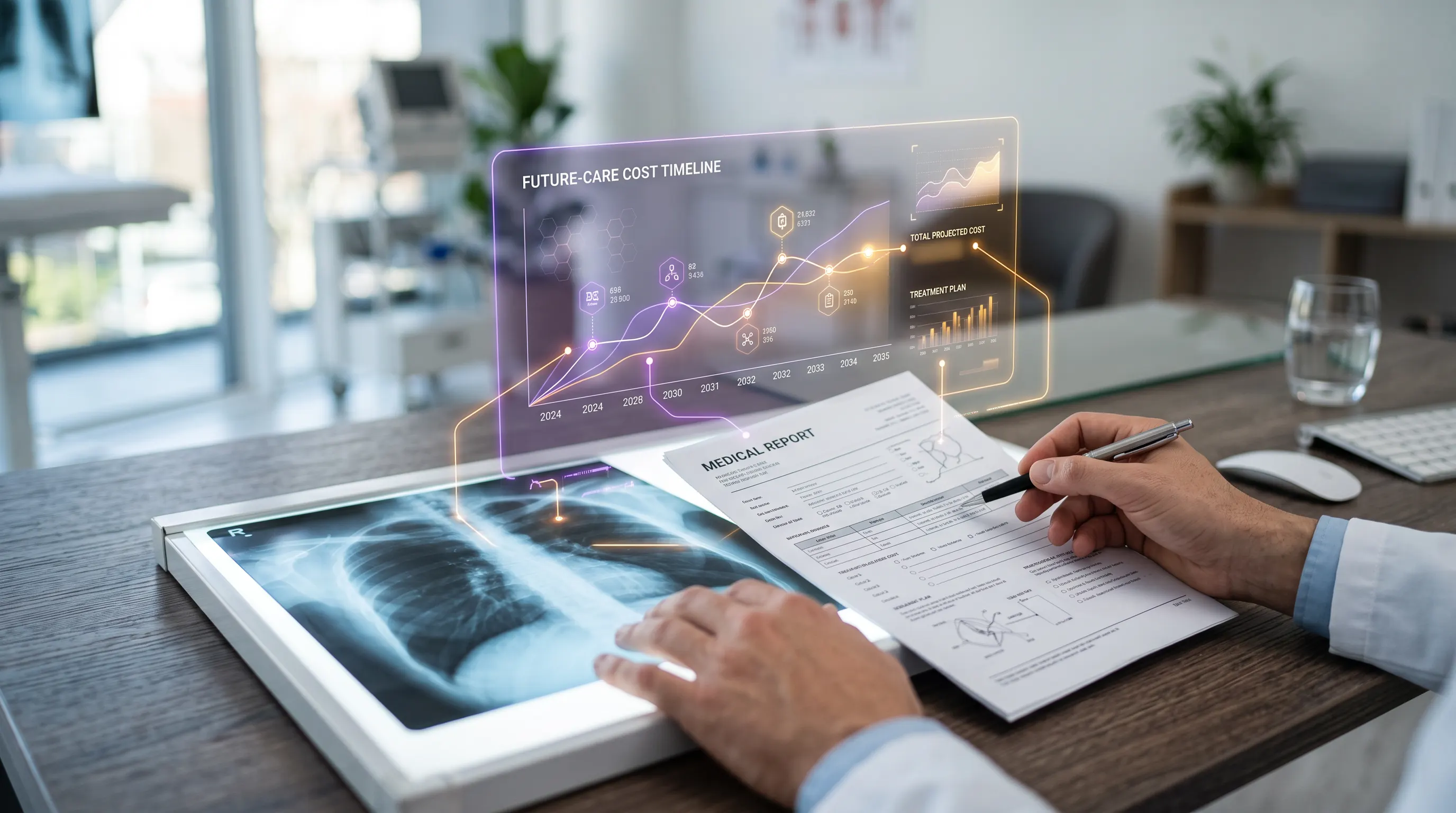
In a serious bodily injury claim, the largest number is rarely the treatment already received. It is the care still to come: future surgeries, rehabilitation, medication, assistive devices, home modifications, and attendant care that can run for years or a lifetime. That figure is also the hardest to fix, and the one claimants most often settle short on.
Future care projection has traditionally relied on a single examiner reading a prognosis and estimating decades of cost by hand. The result varies with who does the work.
AI-assisted examining changes the inputs. It reads the full medical record, extracts the treating physician's prognosis and recommended care plan, and maps each recommendation to unit costs and expected frequency over the claimant's projected recovery or life expectancy. Every line in the projection traces back to a document.

This matters most where the stakes are highest: catastrophic injuries, injured minors, and unrepresented claimants who have no expert to build the projection for them.

Who benefits:
- Claimants: future needs are costed on documented evidence, not guesswork, so serious injuries are not undervalued.
- Unrepresented claimants: receive a structured, defensible projection they could not otherwise afford.
- Care providers: recommended treatment is captured and funded, not quietly dropped in negotiation.
- Insurers: reserves reflect real long-term exposure early, reducing adverse development and disputes.
- Courts and regulators: a consistent, traceable basis for every figure in the file.
The examiner stays the decision-maker. AI assembles the evidence and does the arithmetic; the human judges the prognosis and sets the final number.
A fair settlement is not only about the bills on the desk today. It is about the ones that arrive after the file closes. Getting that number right is how an injured person is actually made whole.