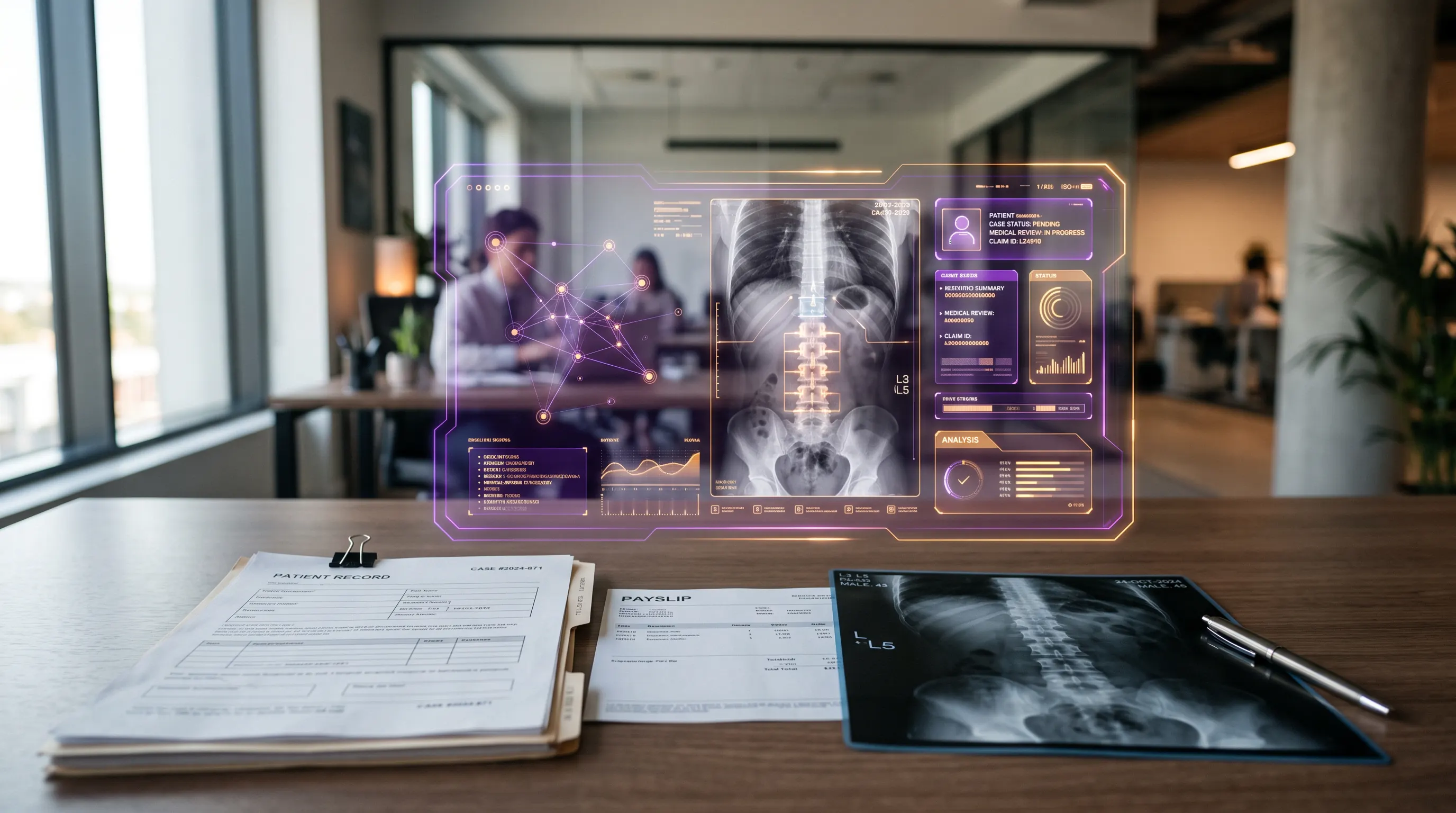
One Claim, Three Models: How AI Examines a Motor Claim From Photo to Payout
Follow a single motor claim through the three AI models that now do the preparation work — computer vision damage assessment, automated fraud detection, and payout processing. A concrete look at how examining works when these run as one sequence.
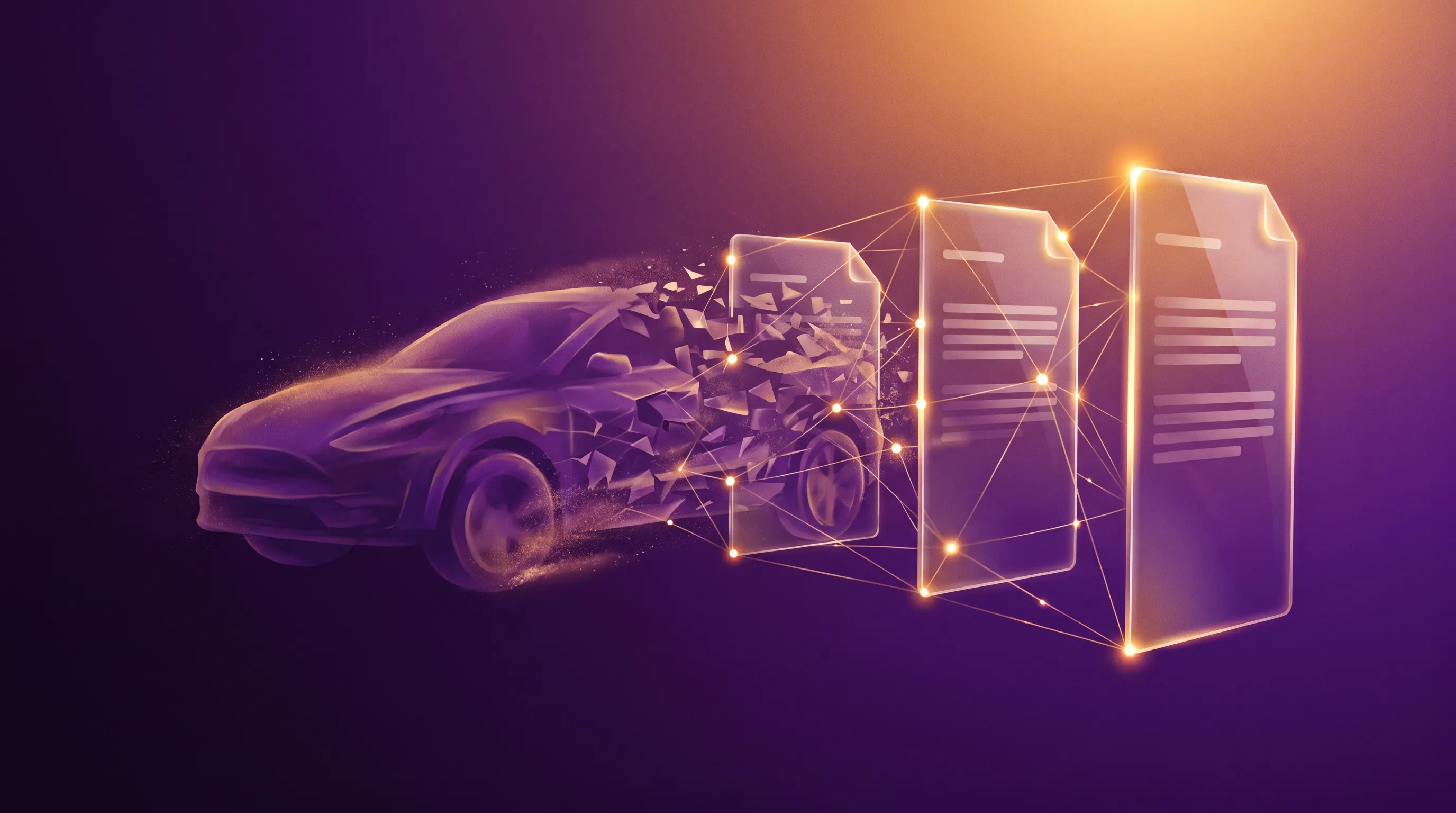
Most coverage of AI in motor claims treats each capability in isolation. In production they run as a sequence on the same file. Here is what happens to one motor claim from the moment the photos arrive.
Step 1 — Computer vision reads the damage
The claimant uploads photos at first notice. A computer vision model segments the vehicle, classifies each affected panel, distinguishes a scuff from structural deformation, and maps the damage to repair operations and parts. Within seconds the file carries a structured damage profile and a first-pass repair estimate — no physical inspection, no waiting on an adjuster's calendar.

Step 2 — Fraud detection scores the file
The same file passes to a fraud layer. Image forensics check the photos for reuse, editing, and metadata mismatches. Network analysis cross-references the parties, vehicles, and repair shop against known claim clusters. Telematics and prior-claim history sharpen the signal. The model returns a risk score with the specific reasons behind it, so a clean claim moves on untouched and a suspicious one is flagged with evidence — not a hunch.
Step 3 — Payout processing routes the decision
With damage quantified and risk scored, the claim routes automatically. Low-value, low-risk files settle straight through to payment. Anything ambiguous, high-value, or flagged lands on an examiner's desk already prepared — damage profile, estimate, fraud rationale, and policy checks assembled in one place. The examiner spends minutes on judgment instead of hours on collation.

Run as one sequence, the three models change what examining is:
- Faster cycle time — photo-to-payout in hours for clean claims, not weeks.
- Lower leakage — estimates and invoices validated against the actual damage.
- Earlier fraud signal — risk scored before money moves, with traceable reasons.
- Focused examiners — human judgment reserved for the files that genuinely need it.
The shift is not that AI replaces the examiner. It is that the file arrives ready for a decision. The examiner still owns the call — they just stop spending the day assembling what they need to make it.