Zero-Touch Motor Claims: How AI Is Enabling Straight-Through Processing for Minor Damage
Minor motor damage claims — the majority of claim volume — are a poor use of examiner time. AI-powered straight-through processing (STP) combines computer vision, fraud scoring, and automated payment to settle clean low-complexity claims without human touch. Here's how the workflow functions and what it means for loss ratios and customer retention.
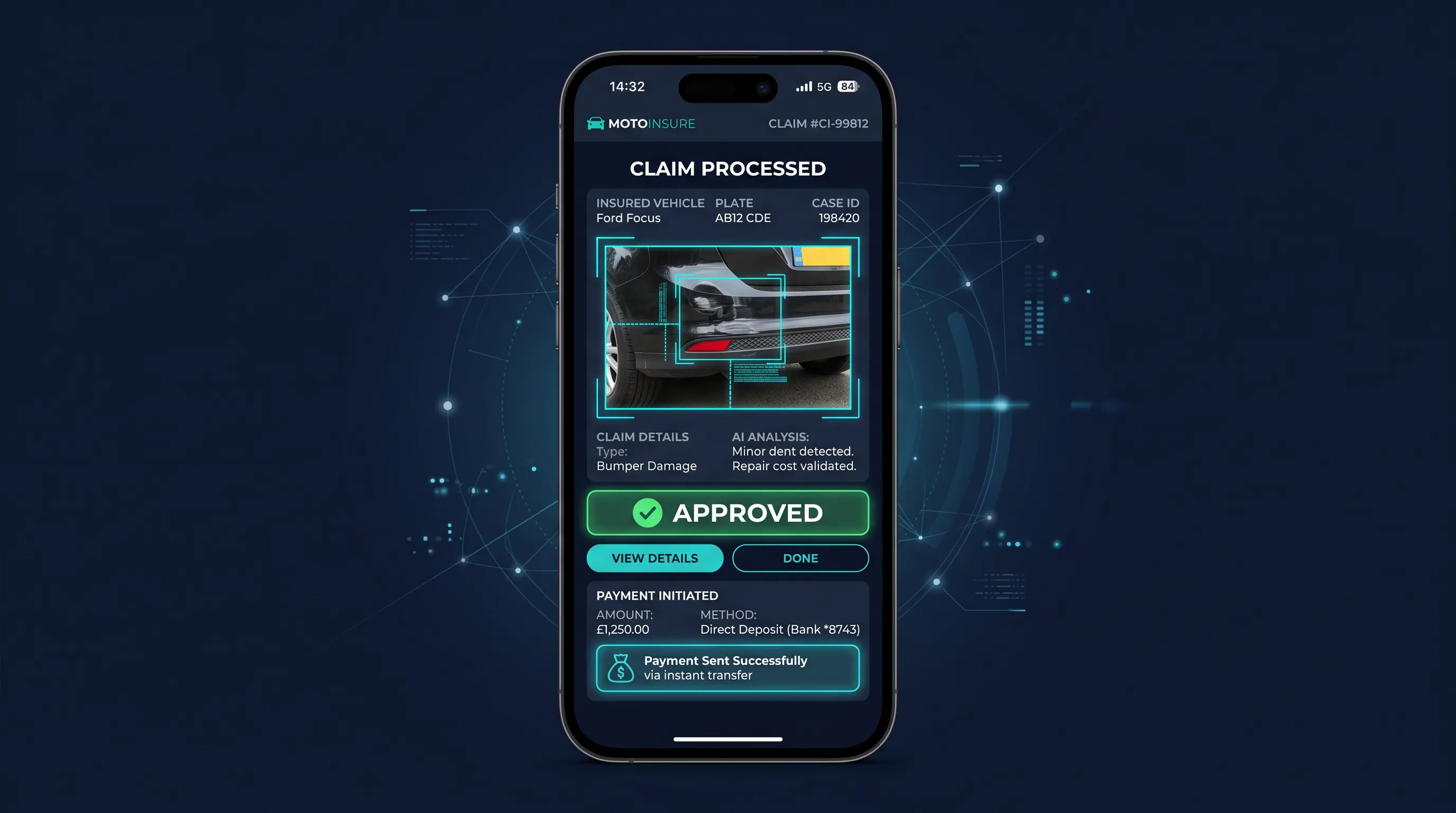
Minor vehicle damage — scratches, single-panel dents, broken lights — represents the majority of motor claim volume but rarely justifies the handling cost. A standard examiner workflow for a £1,500 claim can consume 4–6 hours of resource. AI-powered straight-through processing (STP) changes that equation.

How STP Works in Practice
When a policyholder submits photos via a self-service portal or app, the AI pipeline activates immediately:
- Computer vision classifies damage type, affected panels, and repair method (PDR vs. conventional repair). Depth estimation algorithms infer repair cost without a physical inspection.
- Fraud scoring runs in parallel — checking for image manipulation, metadata anomalies, duplicate claim fingerprints, and policyholder risk signals from historic claims data.
- Rules engine cross-references policy coverage, deductibles, and liability status. If all conditions pass, payment is authorized automatically.
For qualifying claims, this process completes in under 15 minutes.

Key Benefits
- Cycle time: Clean STP claims settle in hours vs. 10–14 days for manual workflows
- Handling cost: Per-claim cost falls 40–60% when human touch is removed from low-complexity files
- Fraud containment: Real-time scoring stops opportunistic fraud without delaying clean claimants
- Examiner capacity: Frees specialists for complex, high-value, or litigated files where judgment adds real value
- NPS lift: Faster settlements materially improve customer retention and referral scores
What STP Doesn't Replace
STP is calibrated for low-complexity, low-value claims where the fraud signal is clean and liability is uncontested. Soft tissue injury, third-party involvement, disputed fault, or any elevated fraud indicator routes immediately to a human examiner. The model flags — it doesn't decide.
Effective STP isn't about removing examiners. It's about concentrating their time where it matters.